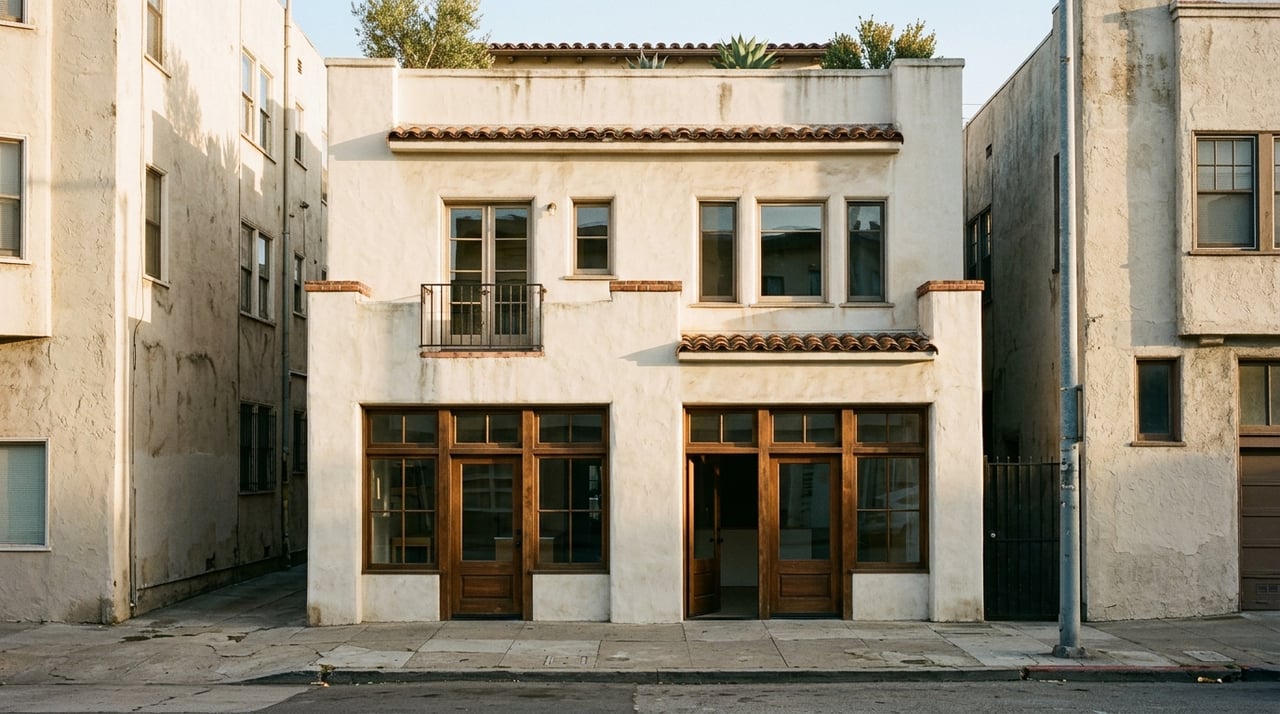
Walk down the Broadway Pedestrian Mall on the wrong Saturday this summer and you will find nothing unusual. No barriers, no signage, no cups. Walk down on the right Saturday and you will find plastic wristbands, a line of "No Alcohol Beyond This Point" signs, a police officer stationed at each end of the block, and a small crowd holding beer and wine from Vesta or LV Mar Tapas & Cocktails while a DJ plays and kids chase a bubble machine near the creek.
Both are the same place. The difference is whether the city has turned the zone on.
The Zone Isn't Always On
On May 11, 2026, the Redwood City Council adopted an ordinance creating the Peninsula's first Entertainment Zone, a defined public area where people 21 and older can legally carry a beer or glass of wine outside the restaurant that sold it. The tool exists because of a 2024 state law, authored by state Senator Scott Wiener, that lets California cities designate outdoor drinking districts during specified hours. San Francisco, San Jose, and Mountain View had already adopted versions of it before Redwood City followed.
What the ordinance created is not a standing feature of downtown. It is a switch the city flips on a case by case basis, and this year the city flipped it on exactly three times: June 11 from 3 to 5 p.m. as an opening tied to the FIFA World Cup, June 20 from 1 to 3:30 p.m. as a standalone weekend activation, and July 18 from 11 a.m. to 1:30 p.m. as a lead-in to a Soccer on the Square watch party for the tournament's third-place match. City staff had said going in that they expected two or three activations over the first three to four months. That is what happened, almost exactly, and each one lasted a few hours, not a season.
Councilmember Marcella Padilla put the intent plainly during the council discussion:
"We claim we have the best climate and it's true, and when these warm months come, people want to be outside, they don't want to rush to finish their drink."
That is a description of a few specific afternoons, not a rebranding of downtown into a year-round beer garden.
Why These Two Blocks, Specifically
The zone covers a tightly drawn footprint: the 2000 block of Broadway between Jefferson Avenue and Main Street, plus the stretch of Redwood Creek that runs from Broadway to the Main Street parking lot. It does not extend into Courthouse Square itself, and it does not cover the rest of the pedestrian mall.
The city's staff report explained the choice with three practical criteria: the block is already closed to vehicle traffic, it has a dense cluster of businesses already licensed to sell alcohol, and it has clear entrances and exits that make the boundary easy to police. In effect, the zone doesn't create new nightlife. It formalizes carrying privileges for a stretch that already includes Pizzeria Cardamomo, Nighthawk, Vino Santo, Vesta, LV Mar Tapas & Cocktails, Blacksmith, Bao, Margaritas Mexican Restaurant, and Vons Chicken, all of which were named as participating storefronts in the city's planning documents.
Here is what actually happened at each activation this year:
| Date | Hours | Tied To |
|---|---|---|
| June 11, 2026 | 3 to 5 p.m. | Launch, timed to the FIFA World Cup |
| June 20, 2026 | 1 to 3:30 p.m. | Standalone Saturday activation |
| July 18, 2026 | 11 a.m. to 1:30 p.m. | Third-place match watch party, Soccer on the Square |
Add the hours up and the entire summer's allotment comes to roughly six hours of legal outdoor drinking on public property, spread across ten weeks.
The 72-Hour Rule Nobody Advertises
If you want to know whether the zone will be active on a given weekend, there is an actual mechanism for finding out, and it is not word of mouth. The ordinance requires the city to send an Activation Notice to every affected business and property owner at least 72 hours before a scheduled special event, and to post a physical copy of that notice at City Hall.
That requirement exists partly because activating the zone costs money. Deputy City Manager Jennifer Yamaguma put the price at roughly $5,000 for a two-hour window, covering police staffing, barriers, signage, and the state-mandated non-glass, non-metal cups. State law bans glass and metal containers in entertainment zones outright, and the city's ad hoc committee went a step further, pushing for compostable cups over plastic.
That cost is a big part of why this stayed a three-time pilot instead of a weekly fixture. Turning the block into a drinking zone is a deliberate, budgeted decision each time, not an ambient permission that clicks on every Friday at 5 p.m.
Two Different Kinds of Growth, a Few Blocks Apart
While the city was rationing six hours of outdoor drinking across an entire summer on Broadway, something much bigger was happening without any ordinance at all on Veterans Boulevard. Reef Zaman, a Mediterranean restaurant from restaurateur Faris Alqabass, soft opened on June 29 in the space that used to hold a Sizzler at 1011 Veterans Blvd. The room seats about 280 people, and the operator has said a planned 2,000-square-foot patio will add another 300 seats, bringing total capacity toward 580, a scale that puts it in a category most Peninsula restaurants simply are not built for. Chef Mohammed Al-Omari, who previously worked at nearby Mazra, is leading the kitchen.
Reef Zaman is open every night. No activation notice, no 72-hour window, no city switch to flip. That contrast says something about how this downtown is actually expanding. On the historic two blocks of Broadway, growth is happening in careful, publicly funded increments, tested a few hours at a time. A short distance away, private capital is building full-time capacity at a scale the neighborhood has not seen before. Both are real. They are just running on completely different clocks.
What Doesn't Need a Permit
The steadier rhythm of a Redwood City summer weekend was already in place before any of this, and it keeps running with no activation notice required. Music on the Square brings free concerts to Courthouse Square every Friday from May 29 through September 4, six to eight p.m., a run of fourteen weeks that has nothing to do with the new alcohol ordinance. The downtown Farmer's Market sets up near the train station on Saturdays between April and November. Fireside Books, an independent bookstore that opened at 2421 Broadway in February 2025, keeps its shelves stocked with local goods a block from the same pedestrian mall the city occasionally cordons off.
None of that needs a switch flipped. It is simply what downtown does every week, with or without a special events calendar.
What Comes Next Is Still Being Argued
State law requires cities to formally reevaluate an entertainment zone every two years, but Yamaguma has said Redwood City intends to watch its economic effect far more often than that, describing the approach as testing, learning, and refining as they go. Councilmember Chris Sturken has already floated extending the hours, allowing cocktails instead of just beer and wine, and opening the space up for private events once the trial period wraps. None of that is decided. What is decided is that, for now, the switch stays off most days, and turns on only when the city says so.
If you already call Redwood City home, the practical takeaway is simple: check before you go. The zone rewards people who know its rhythm, not people who assume it is always running.
Coko Homes tracks these details because we work in the neighborhoods we cover, not just the comps. If you are weighing what a fast, as-is cash sale could look like for a property anywhere on the Peninsula, Coko Acquisitions can walk you through a straightforward offer on your timeline, no repairs and no open-ended showings required.